

 Learn the signs of colic, when your baby’s crying may point to CMPA, and what you can do next
Key Takeaways:
- What is Colic and How Long Does It Last? Colic is a term that describes frequent, intense crying, fussiness, or irritability in otherwise healthy babies. It often starts in the first few weeks of life, peaks around six weeks, and usually improves by around five months of age.¹
- Can Colic and CMPA Look the Same? Cow’s milk protein allergy (CMPA) can cause prolonged crying along with symptoms such as baby reflux, wheezing, hives, eczema, or blood or mucus in the stool. Knowing the signs can help you know when to talk with your pediatrician.
- What Should I Do If My Baby Has Persistent Crying, Fussiness, or Irritability? Your pediatrician can help identify the cause of your baby’s symptoms and recommend next If CMPA is suspected or confirmed, they can help you find the best hypoallergenic formula for your baby, which may include options such as Pepticate or Neocate.
What Is Colic?
It’s late at night, and your baby has been crying for what feels like hours. You’ve fed them, changed them, rocked them, and tried everything you can think of, but nothing seems to help. You start to wonder: Is my baby in pain? Am I missing something? Did I do something wrong?
Unexplained crying or fussiness is one of the hardest parts of early parenthood. It can leave you feeling helpless, frustrated, and even scared. And when it happens day after day or night after night with no clear cause, that uncertainty can wear you down more than the crying itself.
If this sounds familiar, you’re not alone. An estimated 20-30% of babies worldwide experience colic,² which is the term used for frequent, prolonged crying, fussiness, or irritability in an otherwise healthy baby with no clear cause and no response to usual soothing techniques.
Colic isn’t a disease, and it typically starts during the first few weeks of life, peaks around six weeks, and improves by five months of age.¹
Signs and Symptoms of Colic
Every baby is different, but common signs of colic may include³:
- Long periods of intense crying, often in the late afternoon or evening
- Clenched fists
- Stiff or curled-up legs
- An arched back
- A tight or tense belly
- A red or flushed face
- Difficulty being soothed
Despite these symptoms, babies with colic are generally otherwise healthy. A colicky baby may continue to feed well and gain weight normally.
What Causes Colic?
The exact cause of colic is not fully understood. It may be influenced by a range of factors, including some related to the digestive system and others unrelated to digestion. Factors may vary from baby to baby, and in many cases, no single cause can be identified.²
Because there isn’t one known cause, there isn’t one treatment that works for every colicky baby. The good news is that colic usually improves as babies grow.
How Can You Soothe a Colicky Baby?
Pediatric experts recommend trying different calming strategies to see what works for your colicky baby.⁴˒⁵
You can try:
- Holding your baby close
- Rocking or gently swaying
- Using soft white noise
- Talking or singing softly
- Swaddling safely
- Offering a pacifier, if appropriate
- Burping during and after feeds
- Creating a quiet, low-stimulation environment
You may find that some techniques work better than others, and what works one day may not work the next. That’s okay. Remember: You’re not failing if your baby keeps crying.
When Should You Call Your Healthcare Provider?
If you’re worried about your baby’s excessive crying, you don’t have to wait before asking for help. Your pediatrician or healthcare provider can help you understand your baby’s symptoms and rule out other possible causes.
Reach out if your baby has:
- Vomiting, diarrhea, constipation, or blood in the stool
- Eczema, hives, or other skin changes
- Trouble feeding
- Poor weight gain
- Crying or other symptoms that are getting worse or changing
- A fever or unusual sleepiness
- Breathing problems or swelling
If your baby has trouble breathing or significant swelling, seek emergency medical care right away.
Could It Be Something More? Understanding CMPA
While colic is a common cause of excessive crying and fussiness in babies, colic symptoms can sometimes point to a feeding concern, such as cow’s milk protein allergy (CMPA).
CMPA in babies happens when their immune system reacts to the proteins found in cow milk. It can cause symptoms that affect the digestive system, skin, and other parts of the body.²
Look for symptoms² such as:
- Colic symptoms (excessive crying, fussiness, or irritability)
- Digestive symptoms like diarrhea, constipation, blood in stool, reflux and persistent gassiness
- Skin issues, such as eczema, food allergy rash, or hives
- Asthma-like symptoms like wheezing
- Poor weight gain
These symptoms do not necessarily mean your baby has CMPA but it’s important to discuss them with a medical professional.²
Research suggests that CMPA may be considered in babies with colic-like symptoms, particularly when other symptoms are present.² If you’re unsure what your baby’s symptoms could mean, your pediatrician or healthcare provider can help determine what may be causing them and what steps to take next.
“Learning that your baby may have CMPA can feel overwhelming,” said Kendra Valle, registered dietitian and Senior Medical Manager at Nutricia North America. “With guidance from their healthcare provider, parents can find ways to manage symptoms while making sure their baby gets the nutrition they need.”
Exploring Formula Options for CMPA
If your baby has suspected CMPA and is formula-fed, a hypoallergenic formula may be recommended. These formulas are made for babies with cow’s milk allergy and contain proteins that are less likely to trigger an allergic reaction.
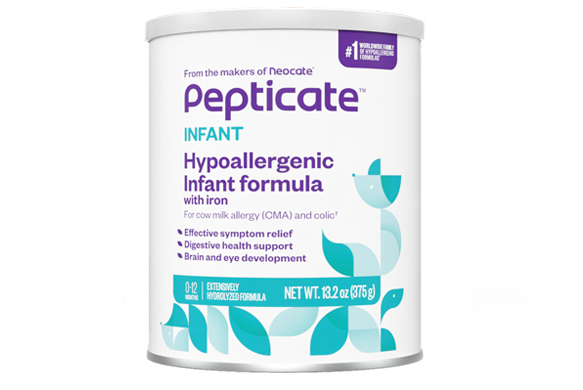
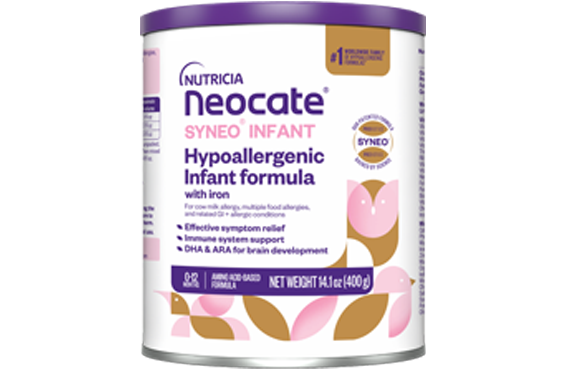
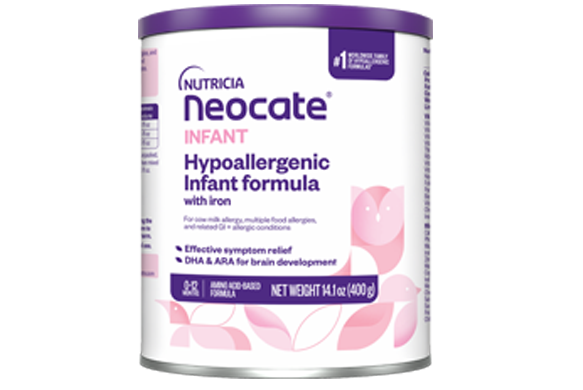
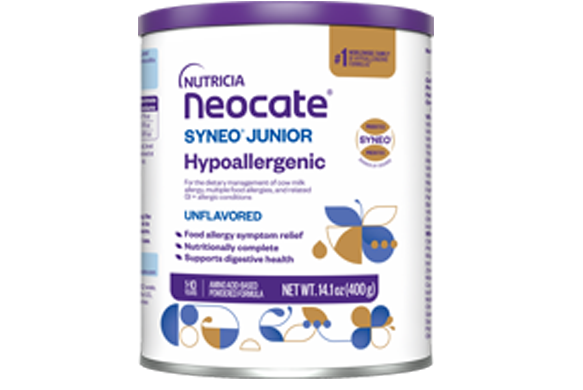
Nutricia offers two hypoallergenic formulas: Pepticate and Neocate.
- Pepticate is an extensively hydrolyzed formula (eHF), sometimes searched for as a formula for colicky babies with CMPA. This means the cow’s milk proteins have been broken down into smaller pieces to make them easier for babies with CMPA to tolerate. Since eHFs like Pepticate can successfully manage allergy symptoms in about 90% of uncomplicated cases, they are often the first choice for most infants with CMPA.⁶˒⁷
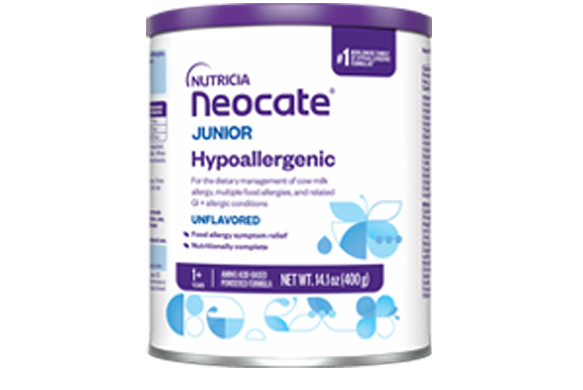
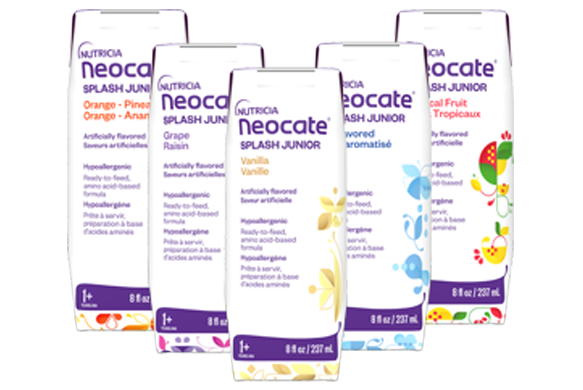
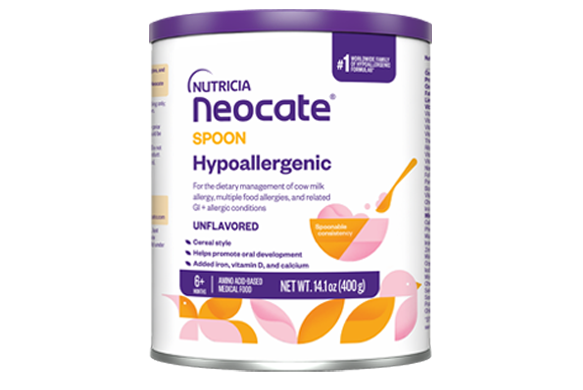
- Neocate is an amino acid-based formula (AAF). Instead of using whole or broken-down cow’s milk proteins, AAFs contain individual amino acids as their protein source, making them the most hypoallergenic type of formula available. AAFs, like Neocate, are often recommended for more stubborn cases of CMPA, when an eHF is not tolerated.
Your baby’s needs are unique, and a healthcare provider can help determine whether a specialized, hypoallergenic formula is appropriate, and which option may meet their needs best.
The Bottom Line
When your baby is crying and you don’t know why, it’s natural to worry. Caring for a colicky baby can be difficult, but it is common and usually improves by five months of age. Talk to your pediatrician if your baby is experiencing colic symptoms, especially if you notice other potential CMPA-related symptoms such as diarrhea, constipation, blood in stool, eczema, reflux, persistent gassiness, wheezing, or poor weight gain. These symptoms may point to CMPA or other feeding concerns.²
And if CMPA is suspected or confirmed, you have options. Your healthcare provider can help you understand the next steps, including whether a specialized hypoallergenic formula such as Pepticate or Neocate may be right for your baby.
Finding answers can take time, but you don’t have to navigate it alone. With the right support, you can take the next step toward helping your little one feel more comfortable.
Sources
¹ The Rome Foundation, Rome IV Criteria, https://theromefoundation.org/rome-iv/rome-iv-criteria/
² Nutrients, Infantile Colic: When to Suspect Cow’s Milk Allergy, https://pmc.ncbi.nlm.nih.gov/articles/PMC12655778/
³ Mayo Clinic, Colic: Symptoms & Causes, https://www.mayoclinic.org/diseases-conditions/colic/symptoms-causes/syc-20371074
⁴ American Academy of Pediatrics, Colic Relief Tips for Parents, HealthyChildren.org, https://www.healthychildren.org/English/ages-stages/baby/crying-colic/Pages/Colic.aspx
⁵ American Family Physician, Infantile Colic, https://www.aafp.org/afp/2004/0815/p735
⁶ Koletzko, et al. J Pediatr Gastroenterol Nutr. 2012;55:221-9.
⁷ Hill, et al. Clin Exp Allergy. 2007;37:808-22.