

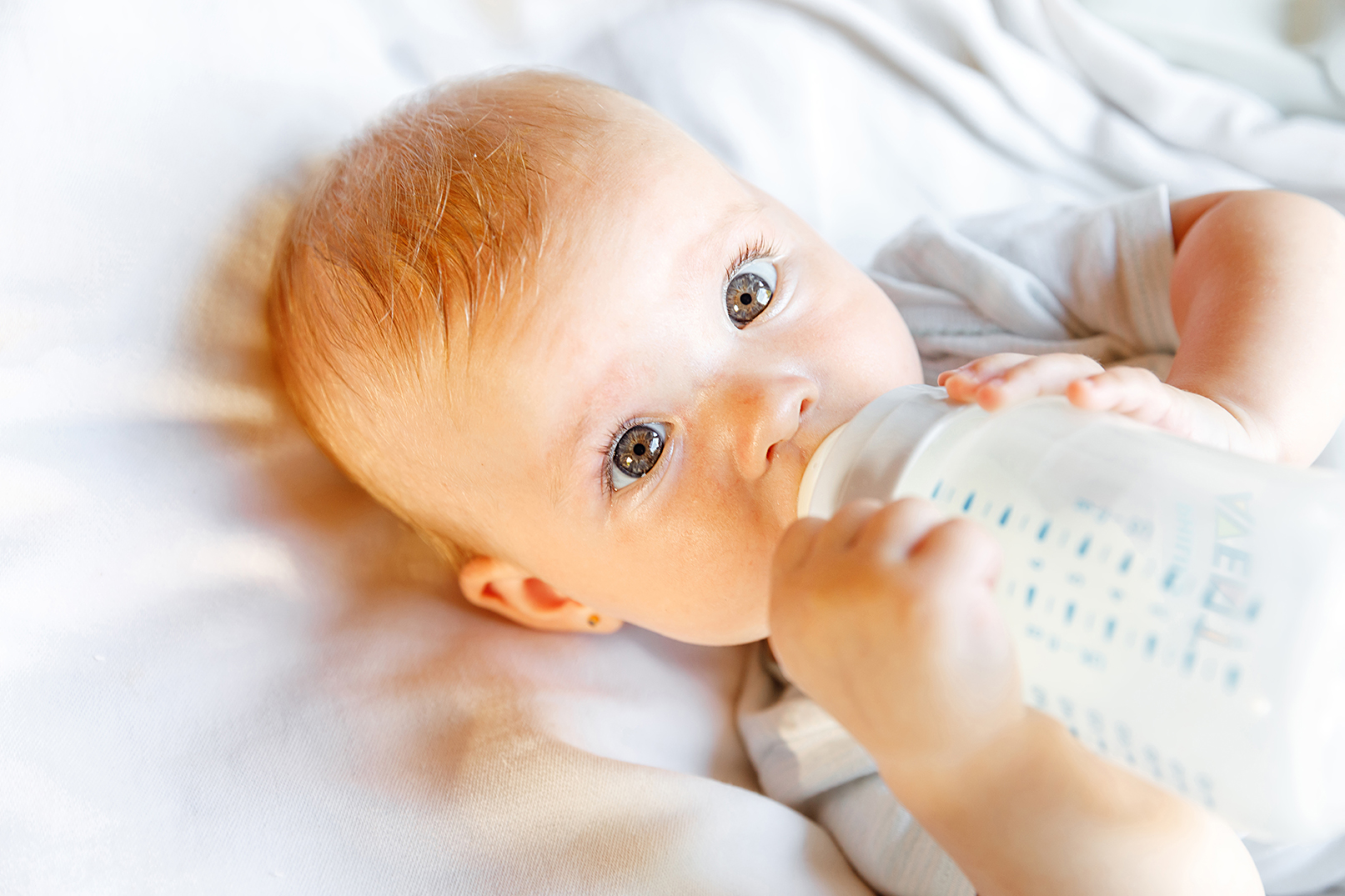
 A pediatrician answers the top questions parents ask about cow’s milk protein allergy (CMPA), from symptoms and formula options to what to expect as their baby grows.
By Michael J. Milobsky, MD
Published on November 4, 2026
Key Takeaways:
- What Are the Signs and Symptoms of Cow’s Milk Protein Allergy (CMPA) in Babies? CMPA can cause digestive issues, skin reactions, and feeding difficulties, which may include or overlap with symptoms of reflux, colic, and other common infant concerns.
- What Is the Best Formula for Babies with Cow’s Milk Protein Allergy? Extensively hydrolyzed formulas (eHFs) are often the first choice for babies with CMPA, while amino acid-based formulas (AAFs) may be recommended when an eHF does not bring relief.
- Do Babies Outgrow Cow’s Milk Protein Allergy, and Can You Breastfeed a Baby with CMPA? Many babies outgrow CMPA in early childhood, and breastfeeding can often continue without changes to the mother’s diet.
As a pediatrician for nearly 30 years and a parent of seven, I know how hard it is when your baby is uncomfortable and you don’t know why. Colic-like symptoms such as excessive fussiness and crying, along with reflux, blood in the stool, eczema, or poor weight gain, can all be signs of cow’s milk protein allergy (CMPA).
Over the years, I’ve heard many of the same questions from parents navigating a CMPA diagnosis. Here are the five most common, along with the data-backed guidance I give.
-
Is CMPA Just a Phase? Will My Baby Outgrow It?
The beautiful thing about CMPA is that the vast majority of children outgrow it. In my practice, most of the children I treat no longer have CMPA by the time they turn three, though some may continue to experience symptoms until age five.
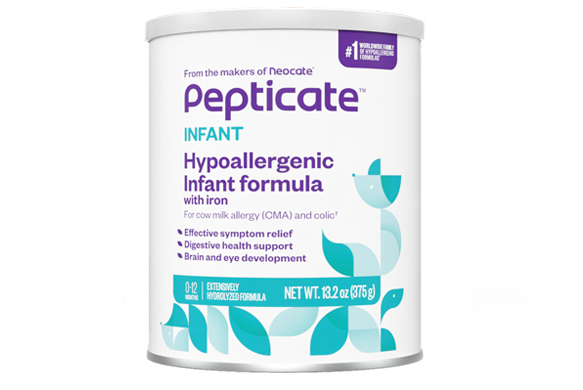
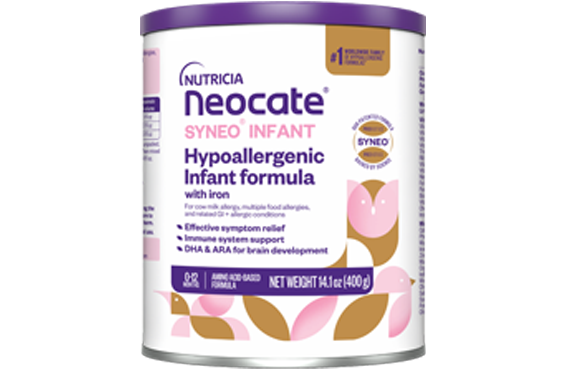
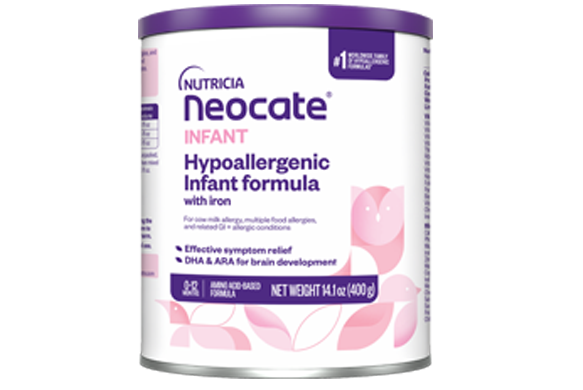
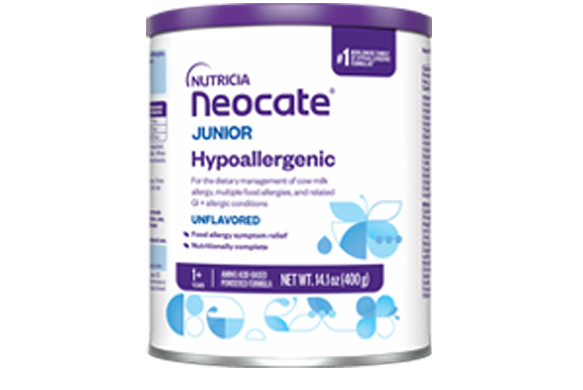
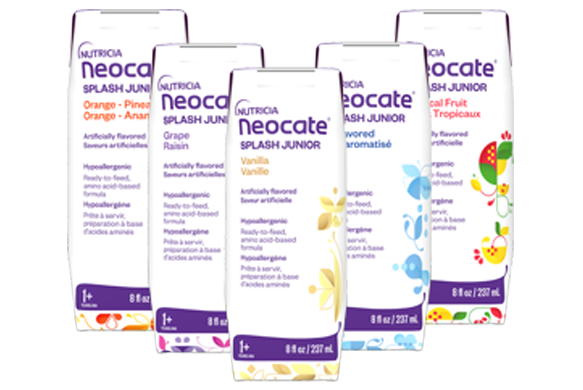
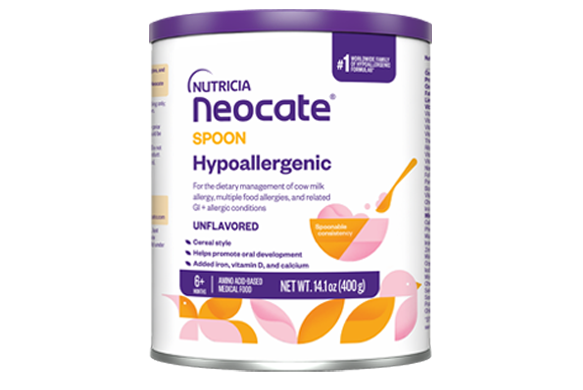
Until then, the right nutritional support can help manage the condition. Most babies with CMPA respond well to an extensively hydrolyzed formula (eHF) like Pepticate. The protein in these products is digested into smaller pieces that are less likely to cause a reaction. For babies with more persistent or severe symptoms, an amino acid-based formula (AAF) like Neocate may be recommended.
Needing specialized formula now doesn’t mean your child will need it forever or that they’ll always have an allergy to cow’s milk protein. Many children with cow’s milk allergy eventually develop tolerance to dairy. Your healthcare provider will help decide when the time is right to reintroduce dairy with a guided gradual approach.
-
How Do I Know If It’s CMPA, Reflux, Colic, or Just a Fussy Baby?
There’s a lot of overlap between what’s normal, what’s colic or reflux on its own, and what may be a sign of CMPA. But there are a few clues that can help point to CMPA.
Colic in the absence of something like CMPA tends to follow a pattern: babies may have calmer mornings, with crying becoming more frequent in the afternoon and evening. But when a baby seems uncomfortable around the clock, that’s my first sign that it might be something more. This could be a sign of CMPA.
Other signs I look for include poor weight gain, blood in the stool, and sometimes eczema. But many babies with CMPA don’t have skin symptoms at all, so their absence doesn’t rule it out.
Ultimately, it’s about looking at the whole picture. If your baby follows the typical colic pattern and is otherwise thriving, I often encourage parents to hold or wear their baby in a carrier or wrap, since contact and motion can help them feel more settled. If symptoms persist or include poor weight gain, blood in the stool, or eczema, talk with your healthcare provider about whether CMPA could be a factor.
-
Why Can’t I Just Switch to Another Standard Formula?
If your baby has CMPA, switching formula brands isn’t necessarily the answer. What matters is how the protein in the formula is processed. “Gentle” or partially hydrolyzed formulas, for example, may be easier to digest, but their proteins aren’t broken down enough for babies with CMPA to tolerate the formula. Formula choice should be guided by the healthcare provider and the diagnosis.
For most babies with confirmed CMPA, an extensively hydrolyzed formula (eHF) like Pepticate is the first option I typically try. The proteins are broken down into fragments small enough that they’re unlikely to trigger an immune response, and approximately 90% of infants with uncomplicated CMPA respond well to an eHF.¹˒² If symptoms aren’t relieved by an eHF, an amino acid-based formula (AAF), such as Neocate, may be the next step. AAFs contain individual amino acids rather than any intact or fragmented cow’s milk protein. I’ve used Neocate in my practice for decades, and I also use Pepticate. I’ve seen great responses to both.
-
Will My Baby Get Enough Nutrition and Gain Weight on a Hypoallergenic Formula?
The short answer is yes. Hypoallergenic formulas for babies with CMPA are thoughtfully crafted to meet the nutritional needs of infants who need to be on these formulas, and these formulas are designed to support healthy growth and development.
When it comes to weight gain with CMPA, removing the allergy trigger is the key step. Once it’s out of the picture, many babies become more comfortable, their appetite and intake improve, and weight gain follows. Of course, every baby is different, but the goal is the same: a baby who is comfortable, well-nourished and back to growing and thriving.
-
If I’m Breastfeeding, Do I Need to Change My Diet Too, or Does My Baby Need Formula Either Way?
If cow’s milk allergy is suspected, breastfeeding can usually continue. Cow’s milk allergy is uncommon in exclusively breastfed babies.³ Symptoms may not always be caused by the small amount of cow’s milk protein that can pass into breast milk, so removing dairy from a breastfeeding parent’s diet isn’t always necessary.³ Because cutting out dairy can be challenging and may affect overall nutrition⁴, it’s best to work with your healthcare provider to decide whether dietary changes are needed.
When breastfeeding isn’t an option or if parents are combination feeding or considering supplementation, hypoallergenic formulas can be used to provide the nutrition babies with CMPA need to thrive.
When In Doubt, Trust Your Instincts
Navigating CMPA can take time, but parents don’t have to figure it out alone. With the right support and nutritional approach, babies with CMPA can comfortably grow and thrive. If something doesn’t feel right, talk with your baby’s healthcare provider about the next step.
About the Author
Michael J. Milobsky, MD, is a board-certified pediatrician with nearly 30 years of experience and the founder of Pediatrics at the Meadows in Castle Rock, Colorado. He is also the co-founder of Chicken Soup Concierge Pediatrics and host of the podcast Your Kids Will Be Fine.
Sources
¹ Koletzko, et al. J Pediatr Gastroenterol Nutr. 2012;55:221-9.
² Hill, et al. Clin Exp Allergy. 2007;37:808-22.
³ McWilliam, et al. World Allergy Organ J. 2023;16:100830.
⁴ Vandenplas, et al. J Pediatr Gastroenterol Nutr. 2024;78(2):386-413