Neocate for Multiple Food Protein Intolerance

It is estimated that 6 to 8 out of ever 100 infants and up to 3 out of 100 older children are allergic to one or more foods.  The most common food allergens are the proteins found in milk, eggs, fish shellfish, tree nuts (e.g. almonds, walnuts), peanuts, wheat and soy.  However, a child can be allergic to almost any food protein.  Most children outgrow food allergies by the age of three.

A food allergy occurs when the immune system mistakenly sees a food protein as something the body should fight off.  The immune response to the food protein and the symptoms that come from that reaction is called an allergic reaction.
The immune response of food allergy may occur with in minutes after a child eats or drinks, or may take several hours of days to develop.  Non-life threatening symptoms may include hives/skin rash, diarrhea, bloody/mucus in stools, vomiting, poor feeding, or poor growth.  Life threatening symptoms can include welling of the mouth or throat, difficulty breathing, wheezing, anaphylaxis or shock.  Such reactions usually occur within a few hours of ingesting the food containing the allergen.

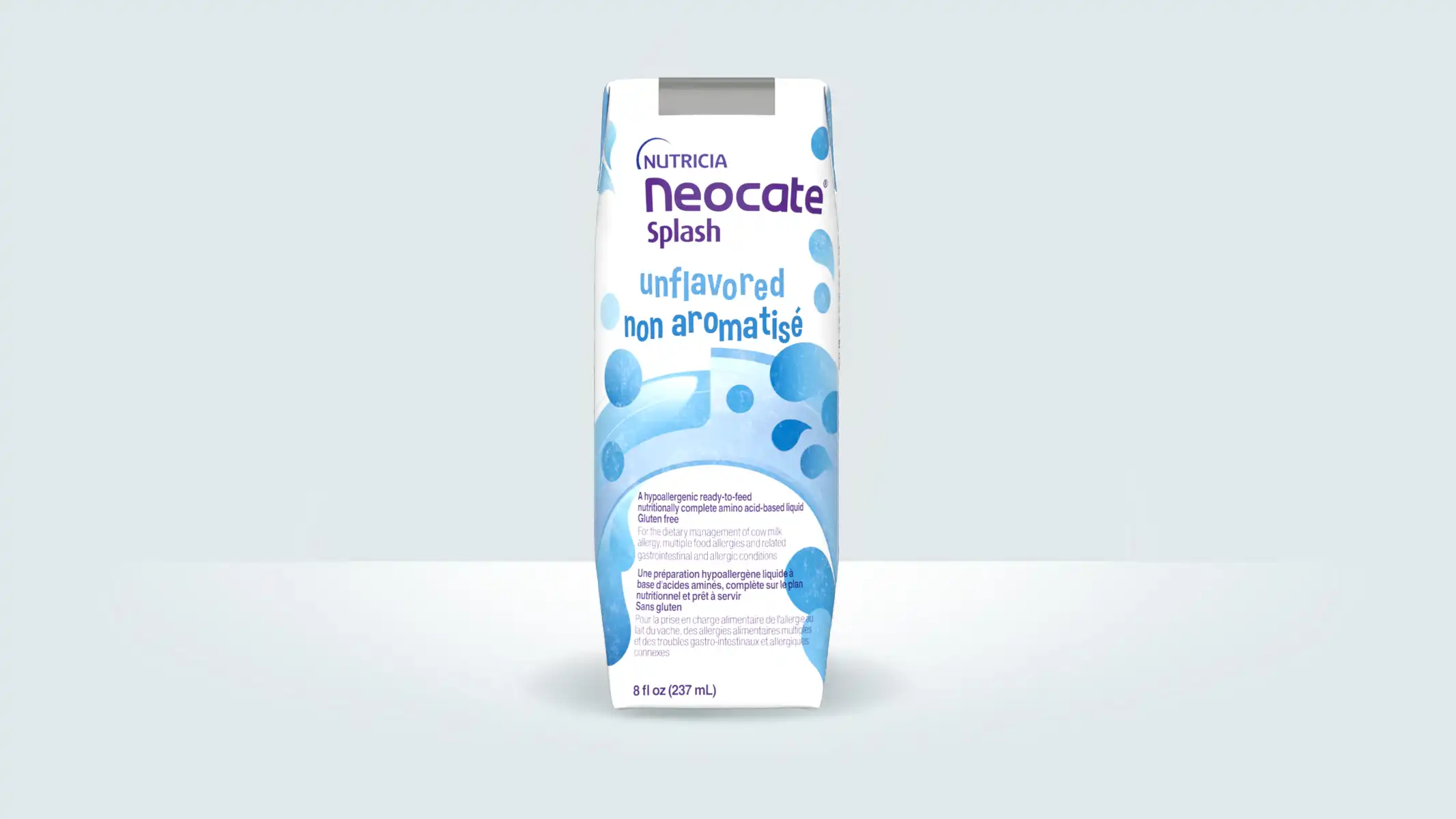
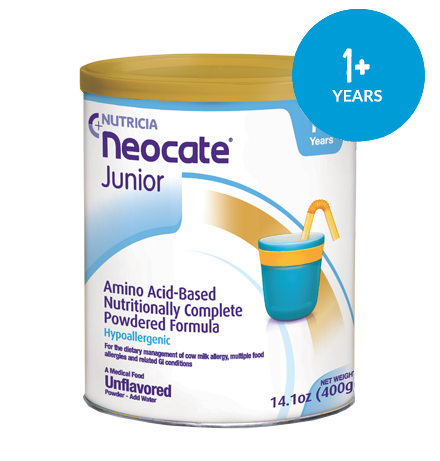
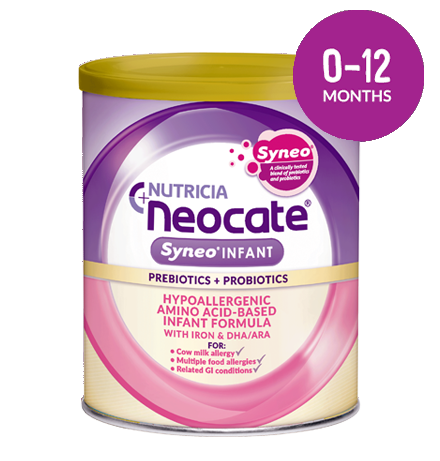
An elimination diet using a hypoallergenic formula such as Neocate can play a key role in the dietary management of children with food allergy. Neocate is different from other formulas because the protein is based on free amino acids.  Amino acids are the building blocks of protein; they are in the simplest and purest form making it easy for infants and children to digest.  Infants and children with a milk allergy have a difficulty in breaking down milk proteins, with Neocate, there are no links to trigger an allergic response. 

Formula based on
partially digested proteins


More allergenic Formula, containing partially digested proteins

Formula based on
100% free amino acids
Least allergenic Formula containing amino acids

The following table compares some of the different infant formulas and identifies the protein source.


Neocate has a distinct advantage over hydrolysate-based formulas as it clearly and definitively excludes cow milk and is proven safe for use in severely allergic infants who cannot tolerate soy formulas or protein hydrolysates.1

Neocate has been clinically proven to help with gastrointestinal conditions in as little as 3 days1 and improve all other allergy-related conditions such as skin rash, eczema or GERD in 14 days2,3. Neocate provides an adequate source of nutrition and has been seen to promote normal and catch-up growth in infants.4,5

More information on food allergies can be found in our Neocate parent guide.  Click here to download


References:
  1. de Boissieu D et al. Allergy to extensively hydrolyzed cow milk proteins in infants: Identification and treatment with an amino acid-based formula. J. Pediatr 1997; 131: 744-747.
  2. Vanderhoof JAet al. Intolerance to protein hydrolysate infant formulas: An underrecognized cause of gastrointestinal symptoms in infants. J. Pediatr 1997; 131: 741-744.
  3. Hill DJ et al. The natural history of intolerance to soy and extensively hydrolyzed formula in infants with multiple food protein intolerance. J. Pediatr 1999; 135: 118-121.
  4. Isolauri E. et al. Efficacy and safety of hydrolyzed cow milk and amino acid-derived formulas in infants with cow milk allergy. J. Pediatr 1995; 127: 550-557.
  5. Niggemann B. et al. Prospective, controlled, multi-center study on the effect of an amino acid-based formula in infants with cow’s milk allergy/intolerance and atopic dermatitis. Pediatr Allergy Immunol 2001; 12: 78-82.